
Currently, global energy supply, especially
electricity, faces numerous severe challenges. With sustained economic growth
and a growing population, energy demand is skyrocketing. Due to the limited and
non-renewable reserves of traditional fossil fuels, overexploitation and
overuse not only threaten resource depletion but also cause serious
environmental problems, such as air pollution, ecological damage, and climate
change caused by greenhouse gas emissions.

Against this backdrop, the need to develop
green and renewable energy sources such as solar, wind, and hydropower has
become increasingly prominent. As a clean, renewable energy source, solar
energy is widely distributed and unrestricted by geographical location. Its
utilization is clean and pollution-free, without generating greenhouse gases or
other harmful emissions. It can help alleviate environmental pressures,
mitigate climate change, and promote the optimization and upgrading of
humanity's energy structure.

In recent years, the solar photovoltaic
industry, both domestically and internationally, has demonstrated remarkable rapid
development. Countries have increased their investment and support for solar
photovoltaics, and continuous technological innovation and breakthroughs have
led to a steady increase in photovoltaic conversion efficiency and a continuous
decrease in costs. In China, governments at all levels attach great importance
to the development of the solar photovoltaic industry and have introduced a
series of supportive policies, including tax exemptions, preferential
subsidies, and land use benefits. These policies have fostered a favorable
development environment for photovoltaic companies, enabling the formation of a
complete and robust domestic photovoltaic industry chain, spanning technology
research and development, raw material production, module manufacturing, and
ultimately system integration and application.

Currently, solar cell research focuses on
high conversion efficiency, low cost, and high stability. As a representative
of new productivity in the new energy sector, cadmium telluride thin-film solar
cells belong to the latest generation of photovoltaic technology. They utilize
a p-n heterojunction structure, consisting of a p-doped cadmium telluride layer
and an n-doped cadmium sulfide (CdS) layer. The photovoltaic device is
primarily constructed by depositing multiple layers of cadmium telluride thin
films on glass or flexible substrates. Compared to first-generation crystalline
silicon photovoltaics, cadmium telluride photovoltaics offer numerous
advantages, including superior low-light performance, large product area, low
temperature coefficient, minimal hot spot effect, high safety, low long-term
degradation, minimal carbon footprint, and flexible customization.
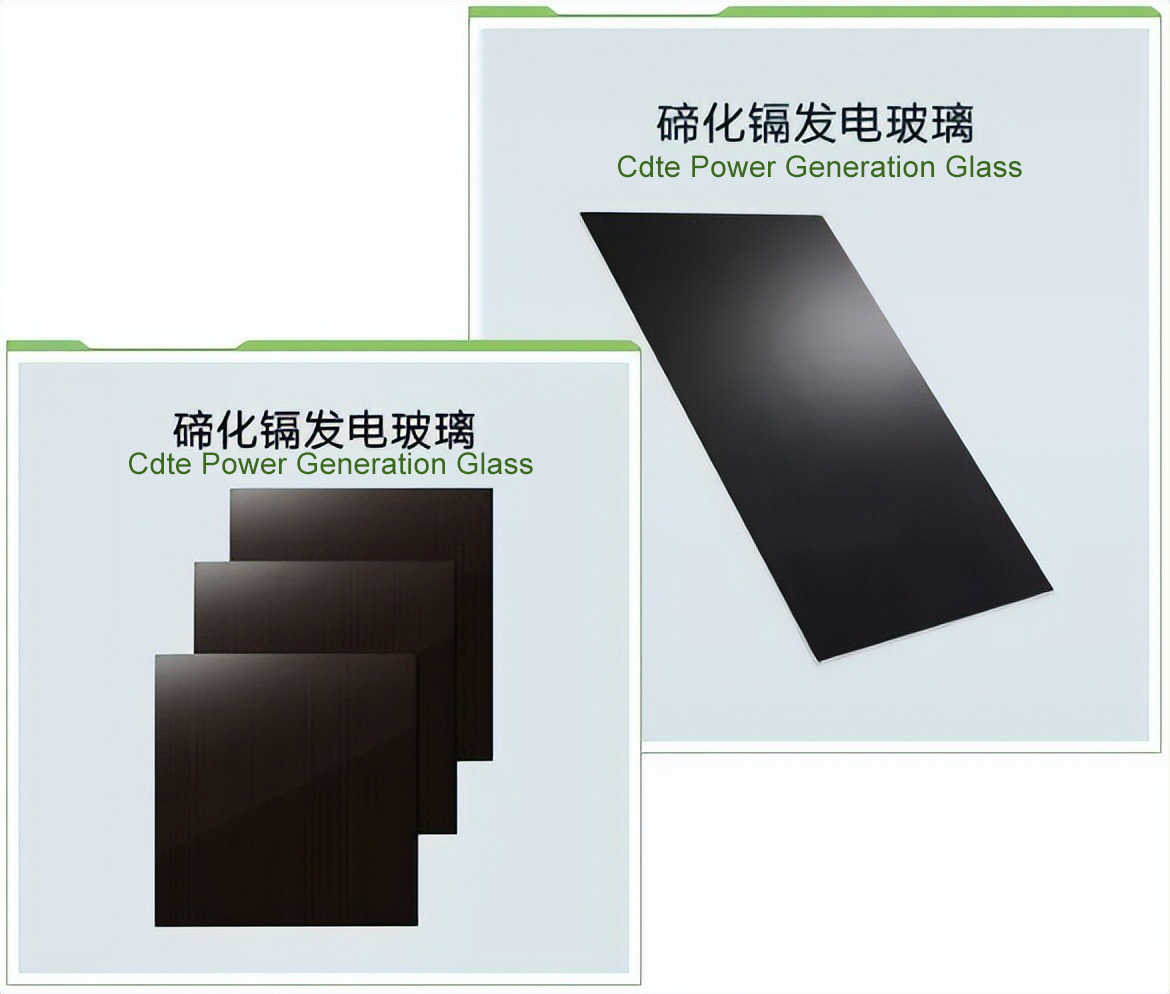
Specifically, the advantages of cadmium
telluride thin-film solar cells and modules are as follows:
1. Energy yield advantage
(1) The annual attenuation rate of cadmium
telluride photovoltaic modules is 0.5%, which means that after 30 years, the
module will still have more than 85% of its power generation capacity;
(2) It has excellent temperature
coefficient and spectral effect, and can provide 4% more energy per year under
hot climate and high humidity conditions;
(3) It has good low-light effect and can
generate electricity in low-light environments such as early morning, evening,
cloudy and rainy days, and is not very sensitive to power loss;
(4) Small hot spot effect: cadmium
telluride thin-film modules are designed with long strip cells, which reduces
the hot spot effect, improves product life and safety while increasing power
generation capacity.

2. Environmental advantages
(1) Upgrading mining waste tailings to
create sustainable and efficient photovoltaic semiconductors. The main raw
materials of cadmium telluride photovoltaic modules are tellurium and cadmium.
Tellurium is generally found in copper and lead ores in nature, such as
copper-lead ore, chalcopyrite and bismuthite. Cadmium is found in zinc ore,
sapphire, silver ore and waste materials from zinc selenate batteries.
(2) The
carbon footprint of cadmium telluride thin-film photovoltaic modules is very
low. During its life cycle, its carbon footprint is 2.5 times lower than that
of crystalline silicon modules and its water footprint is 3 times lower.
(3)
More than 90% of the glass and more than 95% of the semiconductor materials in
cadmium telluride thin-film photovoltaic modules can be reused, which can
improve material utilization and reduce environmental pollution.
(4) The
surface of cadmium telluride solar modules is float glass, which is smooth and
flat, not easy to accumulate dust, easier to clean, and faster and more
convenient to operate and maintain.
(5) According to statistical research by
relevant US units, the cadmium pollution index is the lowest during the entire
power generation cycle of cadmium telluride solar modules, with a pollution
index of only 0.3, which is the same as the pollution index of natural gas.
Under the 14th Five-Year Plan and the 2035 Vision, promoting green and
low-carbon economic and social development is a key component of achieving
high-quality development. The government has intensively introduced a series of
support policies to encourage the further integration of "photovoltaic
plus" with architecture, transportation, industry, and other sectors. Zoom
Solar Green Energy Technology's CdTe thin-film photovoltaic module R&D and
manufacturing base, currently under construction, is located in Qinhan New
City, Xixian New District, Shaanxi Province. The base boasts a fully automated
CdTe module production line with complete independent intellectual property
rights, with an annual production capacity of 300MW of CdTe thin-film solar
glass. Its product conversion efficiency will reach a domestically leading 17%,
providing green and clean energy while ensuring safety, reliability, and
aesthetics.
To meet the diverse needs of users, Zoom
Solar Green Energy Technology has developed a variety of targeted products,
including standardized and customizable photovoltaic modules, Huading products
specifically for rooftop photovoltaic power stations, Huamu products for BIPV,
the Zhidian Huijia series of products for household power stations, and
portable photovoltaic power supply products for outdoor consumers. As
technology matures and the market continues to expand, Zoom Solar Green Energy
Technology's products and services will play a more prominent role in future
energy transformation, leading us towards a greener and more efficient future.