When buildings begin to "photosynthesize," rooftops cease to be silent shelters. They evolve from simple physical protective layers into "architectural organs" capable of engaging with sunlight and autonomously producing energy. This is not merely an accumulation of technology, but a revolution in architectural thinking—making every building an independent, green, and sustainable energy tree.
Today, we don't discuss abstract futures, but focus on a concrete "system"—the cadmium telluride photovoltaic glass roofing waterproofing system—and see how it perfectly integrates the seemingly parallel functions of "shielding from wind and rain" and "clean energy production."
01 Strategic Arrangement: Ensuring Every Ray of Sunlight is "Used to its Fullest Potential"
The arrangement of photovoltaic tiles is not a simple laying out, but a precise calculation of light and shadow.
The array must serve the building, not supersede it.
Parallel Layout Following Water Flow: In the rainy Jiangnan region or the windy coastal areas, a parallel layout following water flow allows the tiles to guide rainwater down quickly, like fish scales.
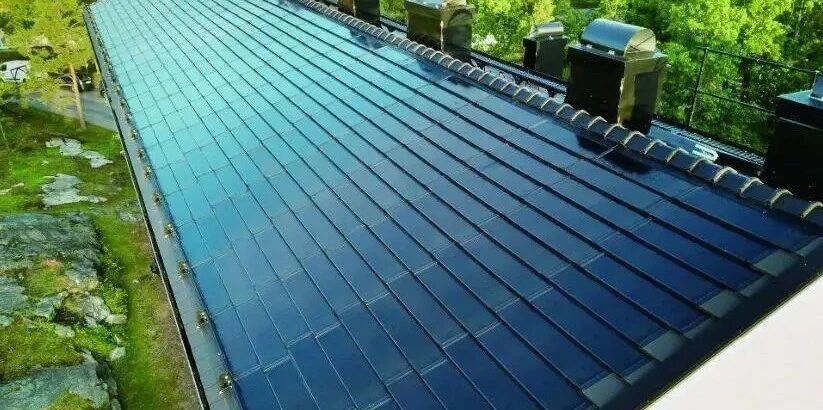
Vertical Array: In modern architecture that emphasizes clean lines, vertical arrays can extend the visual language of the curtain wall, making photovoltaics a natural extension of the facade.
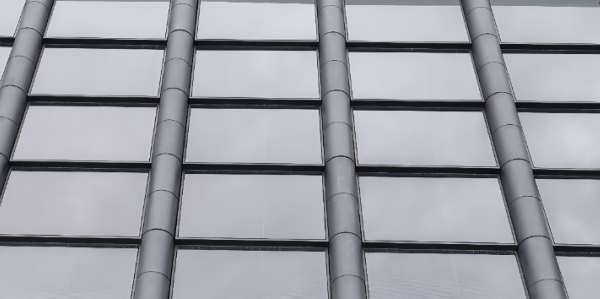
Staggered Adaptive Layout: For uniquely shaped hyperboloids or irregular roofs, a staggered adaptive layout maximizes the capture of every ray of sunlight.
Cadmium Telluride's "Inherent Advantages": Thanks to the excellent low-light power generation performance and low temperature coefficient of cadmium telluride materials, photovoltaic tiles can still generate electricity efficiently even on slopes that are not due south, or even in the low light of early morning or evening, making every side of the building a power-generating surface.
02 Lightweight yet Powerful: Giving the Roof an "Invisible Armor"
Integrating photovoltaic systems into existing buildings, safety is paramount.
Diagnosis First, Construction Later: Before any project begins, we conduct rigorous structural safety calculations, accurately assessing every aspect of the roof's load-bearing capacity to provide a scientific basis for subsequent design.
Dual "slimming down" of materials and structure: Utilizing lightweight cadmium telluride (CdTe) photovoltaic glass combined with a high-strength alloy frame, and employing a unique hollow backplate design, achieves both lightweighting and provides efficient heat dissipation channels for the modules.
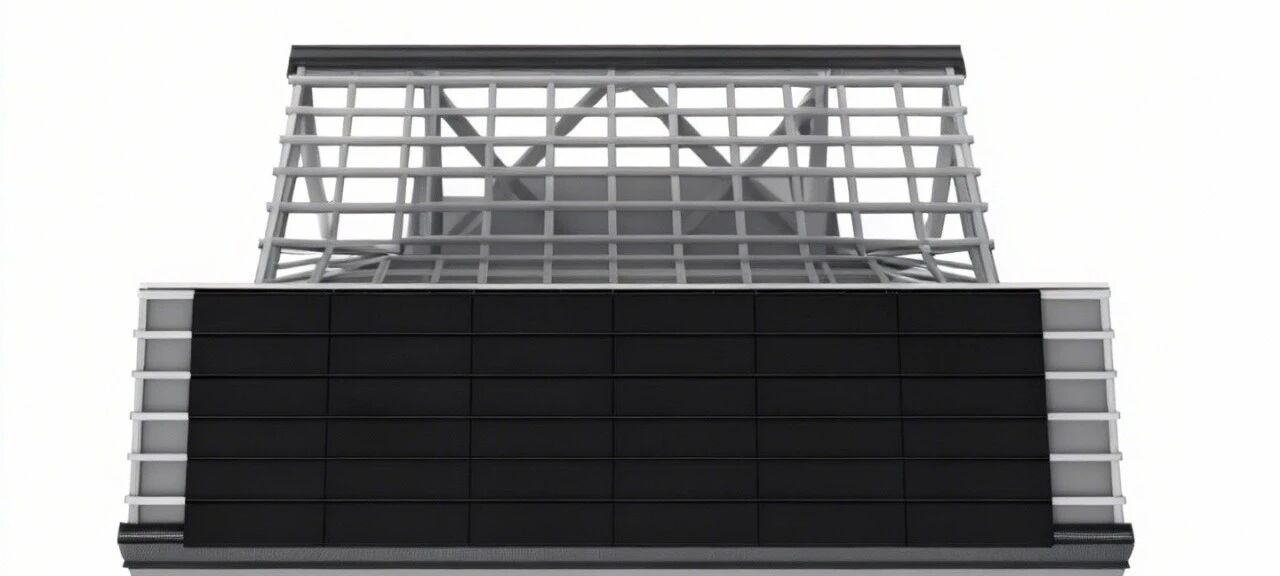
For critical stress points, localized reinforcement nodes are applied to ensure the system can withstand extreme weather conditions such as strong winds and snow accumulation.
03 Material Revolution: Why is CdTe the "Chosen Material" for BIPV?
The choice of photovoltaic technology determines the "lower limit" and "upper limit" of a BIPV system.
ZOOM SOLAR Green Energy Technology's deep commitment to CdTe technology stems from its unparalleled adaptability in building scenarios:
More heat-resistant: A low temperature coefficient means that even in the scorching summer sun, when ordinary crystalline silicon modules become inactive due to high temperatures, CdTe photovoltaic tiles continue to output power stably.
More sensitive: Excellent low-light response allows buildings to continuously harvest green energy even on cloudy, rainy, or smoggy days.
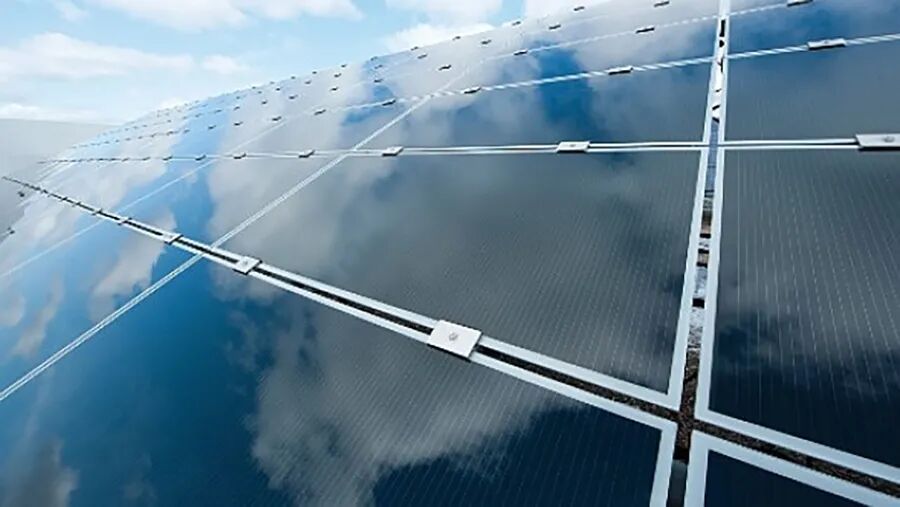
More Aesthetically Pleasing: Cadmium telluride modules can be customized with rich colors, textures, light transmittance, and shapes, truly "born for the building," rather than being a uniform industrial product.
Safer: Strong resistance to shading; localized shadows or dust accumulation will not cause a significant drop in the overall system efficiency, resulting in more stable operation.
04 Leak-Proof: Constructing a "Guidance and Blocking Combined" Waterproof Barrier
For roofs, waterproofing is the foundation; all other functions are secondary. Zhongmao Green Energy Technology's photovoltaic tile system incorporates waterproofing principles into every detail.
Prioritizing Physical Drainage: The tile surface is designed with multi-level drainage channels, enabling rapid stratified drainage of rainwater from high to low; the interlocking structure between tiles physically cuts off capillary seepage.
Reinforced Key Nodes: Waterproof protrusions are installed at screw fixing holes, combined with weather-resistant sealing rings, eliminating the risk of leakage at the fixing points from the source.
Flexible Underlying Defense: Underneath the photovoltaic tile layer, we match high-performance waterproof membranes or coatings according to project requirements, forming a second line of defense. For example, high-temperature resistant TPO waterproof membranes can be used to ensure stable performance even under the baking conditions of photovoltaic modules.
Alternatively, exposed silane-modified polymer waterproof coatings can be used. Their excellent weather resistance and elongation at break effectively cope with substrate deformation, providing long-lasting, invisible protection for the system.
05 Natural Breathing: Installing an "Invisible Air Conditioner" for Photovoltaic Tiles
Overheating is the "number one killer" of power generation efficiency. Therefore, a ventilated air layer needs to be cleverly reserved between the photovoltaic tiles and the roof substrate.
Passive heat dissipation: Air circulates naturally in the interlayer, forming a "chimney effect," which effectively removes heat from the photovoltaic tile backsheet, reducing its operating temperature by 3-5°C, significantly improving power generation and long-term reliability.
Multiple Benefits: This "breathing" interlayer also provides a concealed and safe passage for electrical wiring, and makes future inspection and maintenance easy and feasible.
06 Smart Network: The Invisible Electrical Safety Guarantee
If photovoltaic tiles are the "muscles" of the roof, then the electrical system is the "neural network" permeating it.
ZOOM SOLAR Green Energy Technology has constructed a triple safety protection system for this purpose:
Module-level protection: Cadmium telluride material itself possesses low hot spot effect and excellent arc resistance and insulation properties, fundamentally improving the intrinsic safety of the modules.
System-level monitoring: Equipped with intelligent string monitoring and anti-reverse current devices, it can monitor the operating status of each current circuit in real time. Once an anomaly is detected, it can quickly and accurately disconnect the faulty circuit.
Building-level grounding: Strictly adhering to building lightning protection grounding standards, the entire photovoltaic system is incorporated into the building's "Faraday cage" protection, ensuring absolute safety during thunderstorms.
07 The Beauty of Integration: A Multi-disciplinary "Architectural Symphony"
A perfect BIPV project is not a "solo performance" by photovoltaic engineers, but a "collaborative operation" from beginning to end involving multiple disciplines such as architecture, structure, electrical, and materials.
ZOOM SOLAR Green Energy Technology was deeply involved from the project's inception. We didn't simply supply products; we provided an integrated building facade energy solution.
By treating photovoltaics as a new "building material," we resonate with the architect's vision, refining every detail and overall design to seamlessly integrate photovoltaic tiles with the building structure. From energy consumption to energy generation, from shading to interaction, we believe the future of architecture lies in a deeper integration with nature.