As zero-carbon industrial parks move from concept to reality, who will provide the core driving force for this green transformation?
Zero-carbon Industrial Parks: Not an Option, but a Must
In the spring of 2026, the construction of zero-carbon industrial parks is unfolding at an unprecedented pace. In December 2025, the first batch of 52 national-level zero-carbon industrial parks was officially announced, covering 31 provinces (autonomous regions and municipalities) across the country.
Following this, the 2026 Government Work Report clearly proposed accelerating the comprehensive green transformation, vigorously developing a green and low-carbon economy, supporting the innovative application of green and low-carbon technologies and equipment, and emphasizing "deepening the construction of zero-carbon industrial parks and factories." The National Development and Reform Commission simultaneously deployed efforts to build approximately 100 national-level zero-carbon industrial parks during the 15th Five-Year Plan period, using "carbon emissions per unit of energy consumption" as the core indicator to construct a standardized construction system.
At the same time, the construction of provincial-level zero-carbon industrial parks is being rolled out across the country. Guangdong, Jiangsu, Shandong, and other provinces have already taken the lead in clarifying their construction goals. Some local policies explicitly require accelerating the transformation of the energy consumption structure of industrial parks and supporting the full utilization of resources such as factory rooftops and unused land to build distributed photovoltaic power generation projects on a large scale. The 2026 Two Sessions and the 15th Five-Year Plan placed the construction of zero-carbon industrial parks in a prominent position in the green transformation, establishing a national low-carbon transformation fund to inject dual impetus of policy and funding into this systemic reform. This transformation has rapidly moved from conceptual exploration into a new stage of large-scale and standardized construction.
So, how should zero-carbon industrial parks be built?
BIPV: A Must-Have for Zero-Carbon Industrial Parks
Among the eight key tasks for zero-carbon industrial parks, "accelerating the transformation of the park's energy consumption structure" is listed first. Policies explicitly support the large-scale construction of distributed photovoltaic power generation projects.
This means that the role of buildings is undergoing a fundamental transformation: they are no longer simply "energy-intensive consumers," but are expected to evolve into "energy hearts."
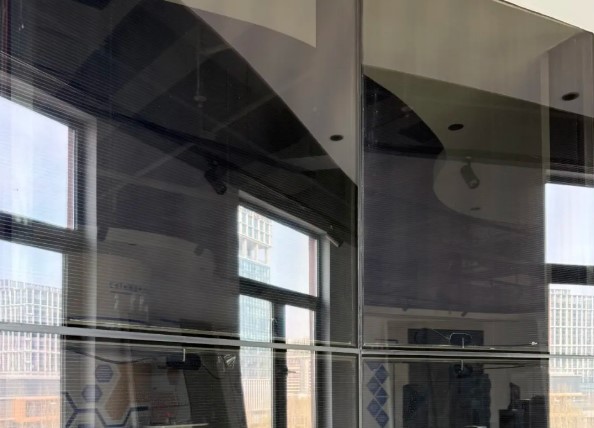
Building-integrated photovoltaics (BIPV)—making photovoltaic modules an integral part of buildings. Roofs, curtain walls, skylights, fences—every inch of facade can become a power generation unit.
In this green transformation, cadmium telluride thin-film photovoltaic modules, with their unique technological advantages, have become the core technology choice for BIPV zero-carbon industrial parks.
Why cadmium telluride? —A Technological Advantage That Overwhelms Others
Compared to traditional crystalline silicon photovoltaics, cadmium telluride (CdTe) thin-film photovoltaic modules exhibit irreplaceable advantages in BIPV (Building Integrated Photovoltaics) scenarios:
Superior Low-Light Performance:CdTe is a direct bandgap material, exhibiting excellent absorption across the entire spectrum. Its power generation performance is significantly superior to indirect bandgap crystalline silicon cells under low-light conditions such as early morning and evening. This means that buildings in the industrial park can continuously generate power from sunrise to sunset, rather than just operating efficiently at midday.
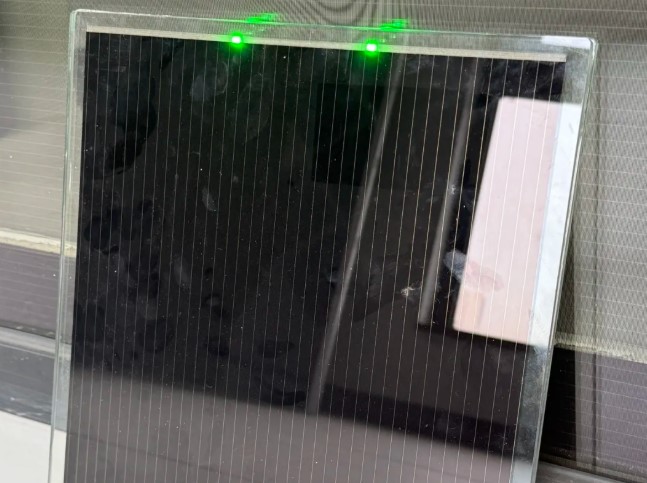
Exceptional High-Temperature Adaptability: CdTe has a temperature coefficient of only -0.19% to -0.21%/℃. Even when module temperatures are high in summer, its power generation capacity is significantly better than crystalline silicon. For large-area building facades and curtain walls, this advantage means a substantial reduction in power generation losses under high summer temperatures.
Minimally Low Hotspot Effect: CdTe thin-film photovoltaic modules have no hotspot effect, which improves power generation capacity while ensuring product lifespan and safety.
modules can be flexibly customized in terms of color, pattern, shape, size, and light transmittance, achieving diverse aesthetic effects such as mimicking stone and aluminum, and seamlessly integrating with various curtain wall forms. In the construction of zero-carbon industrial parks, this is not only a power generation device but also a building "skin" that embodies green concepts.
Short industrial chain, low carbon footprint. The CdTe industrial chain is short, with low raw material consumption and extremely low overall energy consumption, reducing carbon emissions not only during the operation phase but also from the construction phase.
From blueprint to reality: How CdTe BIPV illuminates zero-carbon industrial parks
Under the policy blueprint, the application of CdTe BIPV has yielded fruitful results. Several domestic building projects have adopted this technology—Jiangsu's first "power-generating" exhibition hall and the CdTe power-generating glass curtain wall at the Shanghai CNBM Kaisheng Robotics R&D Center, among others. These projects have achieved building energy self-sufficiency or significantly improved energy efficiency through the integrated design of rooftop photovoltaics and facade curtain walls, verifying the feasibility and promotional value of CdTe technology in the construction of zero-carbon industrial parks.
Cadmium telluride BIPV is not the future, but the present. It's not a stopgap measure of "building first, then adding PV," but rather making PV an integral part of the building. Because of this, it shortens the construction cycle, reduces overall costs, and provides core support for parks to obtain zero-carbon/near-zero carbon certification with accurate power generation and carbon reduction data.
Zero-carbon parks begin with "buildings that generate electricity"
As 100 national-level zero-carbon parks are completed in the next five years, and as buildings transform from "energy consumers" to "green producers," every participant in this green revolution is writing history. Zero-carbon parks are not built in a day, but they can begin with a choice—choosing to make every building in the park a green energy station that generates electricity.
ZOOM SOLAR Green Energy Technology is committed to providing full-scenario BIPV solutions for zero-carbon parks, from rooftops to facades, from skylights to fences, using cadmium telluride thin-film solar technology. Deeply integrating PV with buildings, making zero carbon no longer a concept, but a tangible everyday reality.
Is your park ready to generate electricity?