In the rapidly developing Building-integrated Photovoltaics (BIPV) industry, "conversion rate" is often regarded as a core indicator for measuring module performance, almost like a "report card" of its technological capabilities, attracting much attention. However, when we shift from the "standard testing environment" of the laboratory to the complex outdoor power generation scenarios—especially for thin-film modules like Cadmium Telluride (CdTe) with special properties—should we still rely solely on "conversion rate" as the evaluation standard? Clearly, we need a more comprehensive perspective.
Here, let's delve deeper: why, in BIPV applications, should we move beyond the inherent concept of "conversion rate priority" for CdTe modules and instead focus on the more practical and value-reflecting dimension of "power generation capacity"?
Part 01 Beyond Conversion Rate: Three Key Advantages of CdTe Modules in Actual Operation
In fact, STC (1000W/㎡ irradiance, 25℃ cell temperature, AM1.5 spectrum), as an industry-standard testing benchmark, is more like a "standard laboratory portrait"—precise and uniform, but difficult to replicate the diverse real-world application scenarios.
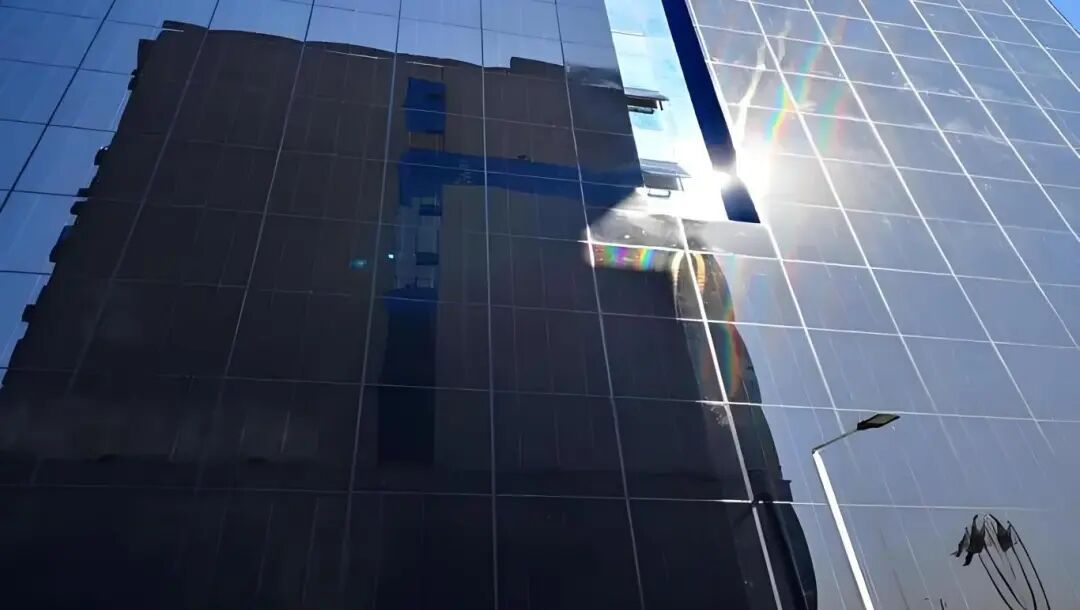
So, how exactly do cadmium telluride (CdT) modules demonstrate their comprehensive advantages under real-world operating conditions? **Light Adaptability:** In actual deployments, the "natural condition" of the project location's average annual sunshine duration is often not fully reflected in the STC standard.
In areas with abundant sunshine, even with slightly lower module efficiency values, the longer effective power generation time can still result in a significant increase in total power generation. In areas where the average annual irradiance is less than 80% of the STC conditions, CdT's low-light response advantage allows it to still efficiently capture solar energy. **Temperature Stability:** CdT modules have a low temperature coefficient, a characteristic particularly crucial in real-world high-temperature environments.
In summer, outdoor module surface temperatures often exceed 70°C, far surpassing the STC benchmark of 25°C. This means that during actual power generation in hot weather, CdT modules tend to maintain more stable power output at the same nominal power. **Spectral Matching:** As a direct bandgap material, CdT's 1.45 eV bandgap has a high degree of matching with the solar spectrum, allowing it to maintain good performance even during low-irradiance periods such as dawn and dusk. For BIPV projects, this directly translates to longer daily power generation time and a smoother power output curve, thereby improving the overall system efficiency and availability. Beyond macroscopic environmental factors, the physical and electrical characteristics of the modules themselves are also crucial in determining the actual power generation performance of BIPV projects.
Part 02 Beyond Single Efficiency: The Multidimensional Competitiveness of Cadmium Telluride Modules in Building Integration
Strong Shading Tolerance, Safer and More Efficient Systems
BIPV applications are often situated in complex building environments, where localized shading—such as from surrounding high-rise buildings, window frames, trees, or dust and bird droppings—is unavoidable.
CdTellin modules utilize a thin-film structure integrally deposited on a glass substrate, offering greater flexibility in their internal current paths. When localized shading occurs, the current can redistribute and bypass the obstructed area, significantly reducing system power loss. This characteristic also enhances overall safety, significantly reducing the fire hazard that may arise from hot spot effects.
Excellent Degradation Performance, Longer-Lasting Power Generation Benefits
Long-term degradation performance is another important indicator that is often overlooked.
Cadmium telluride (CTD) modules typically experience an initial degradation of about 5% in the first year, with an average annual degradation rate of approximately 0.4% thereafter. Over a 25-year operating cycle, this translates to a higher cumulative total power generation. Even in the later stages of a project's operation, the modules maintain a relatively high output capacity, providing owners with continuous and stable energy benefits.
Furthermore, CTD technology demonstrates significant flexibility in product customization; different module structural designs directly impact their power generation behavior.
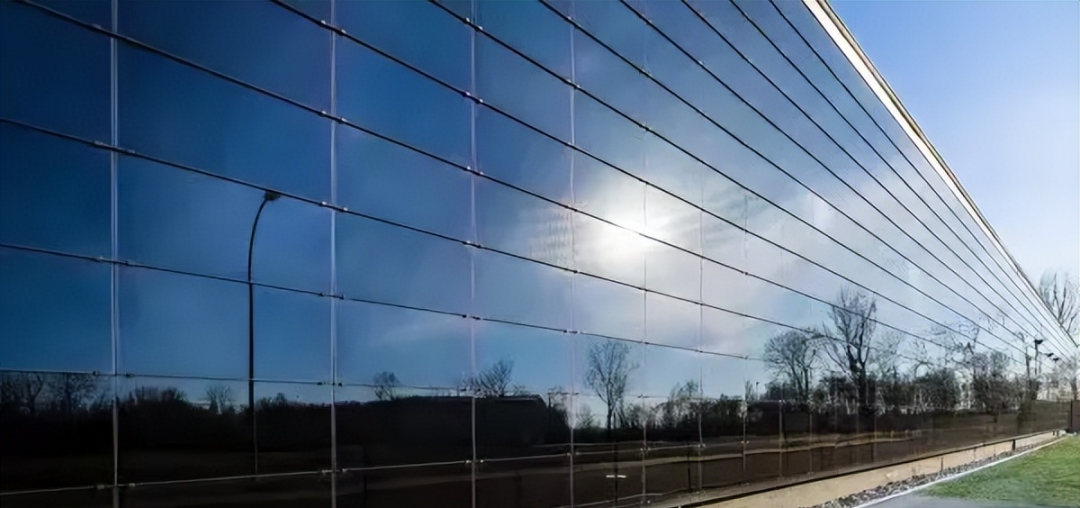
Customizable Light Transmittance, Balancing Building Lighting and Power Generation
The light transmittance of CTD modules can be adjusted from 10% to 80%, achieving a visual effect close to that of ordinary architectural glass. However, there is a trade-off between light transmittance and power generation efficiency: increasing light transmittance allows more sunlight to enter the room, but reduces the number of photons used for photoelectric conversion.
Color Expression, Balancing Aesthetics and Power Generation Efficiency
Cdte modules have a unique advantage in achieving aesthetically pleasing colors for buildings.
Traditional enamel coating processes can obscure the power generation layer, reducing light absorption. Current advanced nano-coating technology in the industry, by constructing special optical structures on the glass surface, can present rich and stable colors while minimizing the impact on power generation performance, thus better balancing building aesthetics and photovoltaic functionality.

Part 03 Rediscovering the Value of Orientation: A New Logic for Facade Power Generation
In traditional photovoltaic systems, the optimal tilt angle and due south orientation are usually considered design guidelines. However, in the field of building-integrated photovoltaics (BIPV), the modules are first and foremost an indispensable part of the building, their primary responsibility being to serve the building's function and the spatial experience of people.
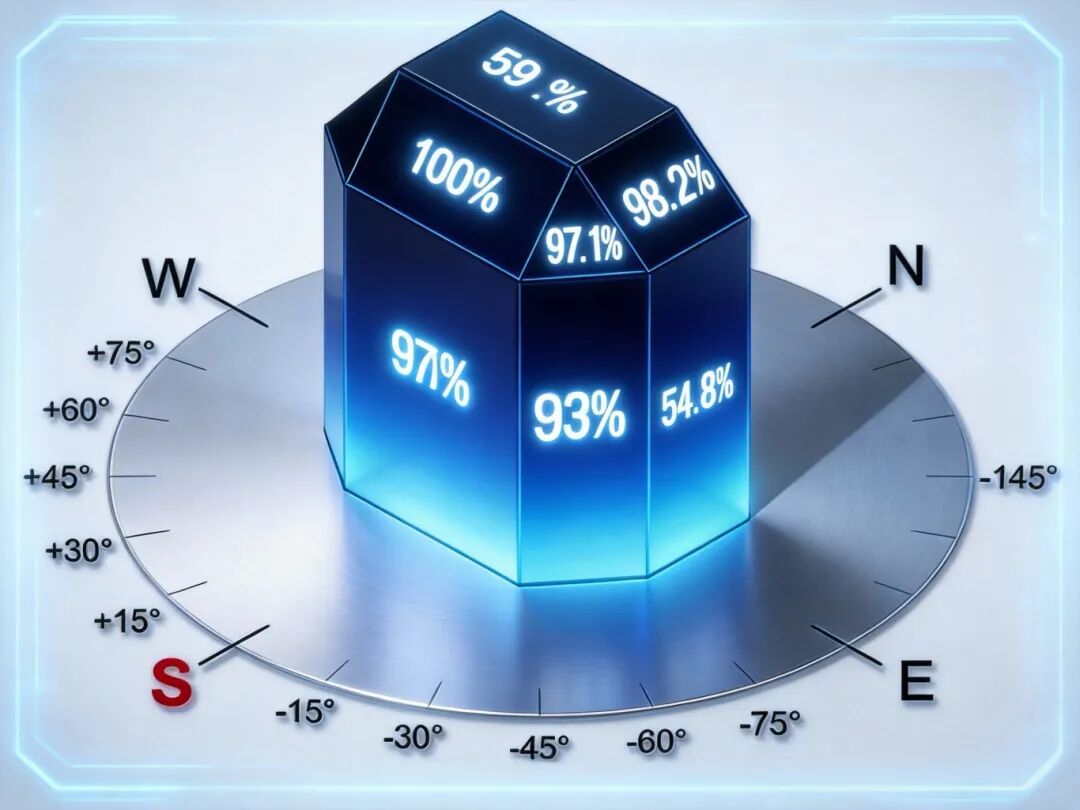
The area of east and west facades in modern buildings is increasing. From the perspective of traditional power plant efficiency, this seems to mean a loss in power generation. However, with the widespread implementation of time-of-use pricing mechanisms, cadmium telluride modules installed on east and west facades can respectively absorb solar radiation in the morning and afternoon. Their peak power generation coincides with the daytime electricity consumption curves of office and commercial buildings, thus providing more electricity during periods of higher electricity prices, significantly improving project economic benefits and grid synergy.
Current time-of-use pricing policies are showing new characteristics: most regions have established and extended the "midday off-peak electricity" period, leading to an overlap between peak photovoltaic (PV) power generation and off-peak electricity consumption. Since 2025, more than ten provinces across China have adjusted their TOU policies, with the midday off-peak electricity period generally extended, sometimes by as much as eight hours. This change has significantly impacted the profitability of conventional PV power plants facing south and positioned at optimal tilt angles.
Excellent architectural design and PV integration can break through the traditional thinking that "orientation determines power generation." By optimizing the facade design, the PV receiving surface can be adapted to the optimal local sunlight angle, allowing even "less than ideal" building facades to receive more sufficient and uniform solar radiation.
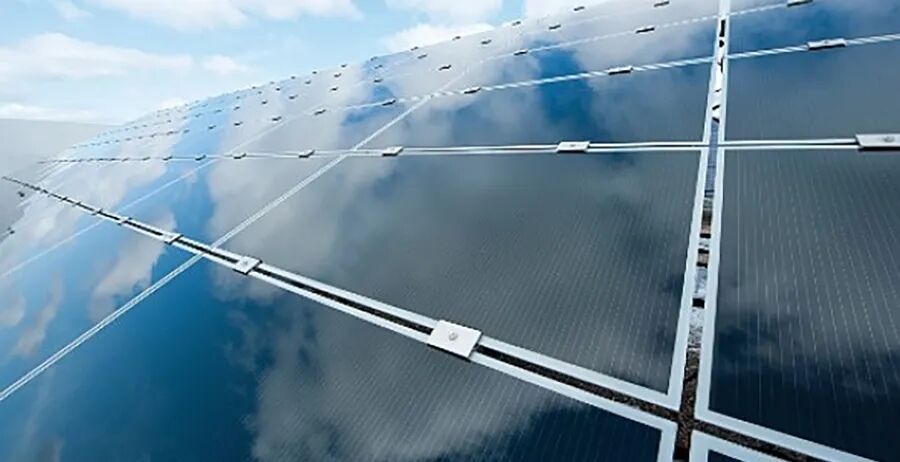
With the deepening of electricity market trading, PV projects no longer simply pursue maximum installed capacity or power generation. Instead, they need to comprehensively consider multiple factors such as actual user load and TOU pricing structures, systematically optimizing design parameters such as installation area, module orientation, and tilt angle to achieve optimal overall economic efficiency.
Therefore, in BIPV projects, the most outstanding performance is often not achieved by the components with the highest conversion rates, but rather by the technological solutions that best integrate architectural aesthetics and practical functionality, and best align with users' electricity consumption habits.
The entire industry is gradually shifting from a "component-oriented" approach to a "systems-oriented" one. Conversion rates are merely the starting point; the real competition lies in how photovoltaic technology can coexist with buildings, coordinate with electricity consumption scenarios, and coexist harmoniously with time. ZOOM Solar Green Energy Technology Co., Ltd. is guided by this principle, committed to providing more integrated, durable, and intelligent cadmium telluride photovoltaic solutions, enabling every building to become an energy source that travels with the light.